
Fulltime campus living and lecture halls are no longer the exclusive options for higher education. Universities all throughout the world have subtly changed the way degrees are awarded in recentyears. Many universities now offer programs that combine online study with shorter, more concentrated campus experiences, rather than requiring students to relocate for two or three continuous years. This development has altered the options for students thinking about studying abroad. Studying overseas does not have to mean abandoning everything. For people who desire worldwide exposure without the whole financial and personal upheaval of relocating abroad permanently, hybrid and flexible formats are providing opportunities.
The Reasons Behind Universities’ Growth in Blended Formats
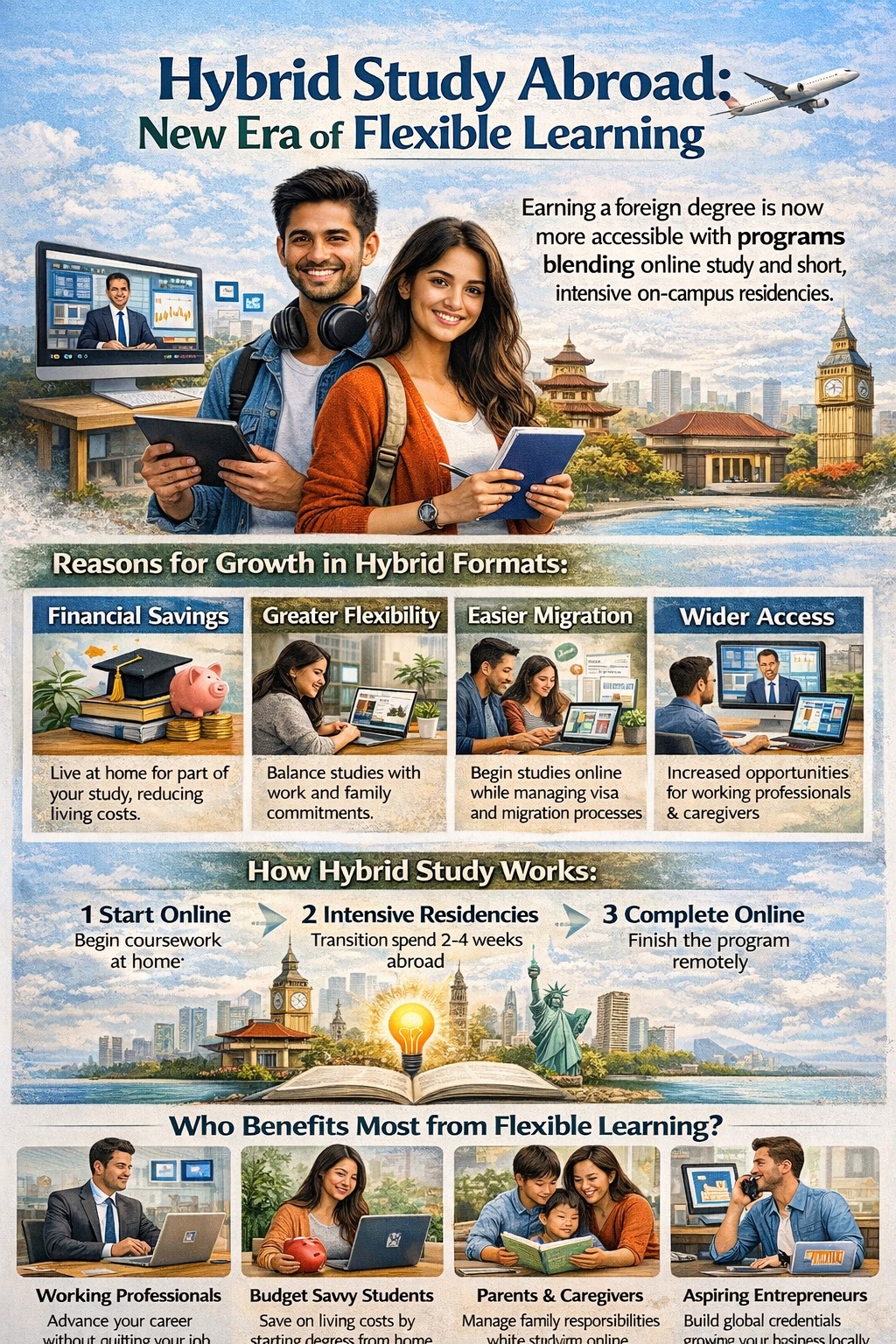
Universities in a number of nations, including the UK, Canada, Australia, Germany, and Ireland, are developing programs that blend in-person residencies with distance learning. Before moving to campus, several students finish their first semester online. In others, the curriculum alternates between on-site and online components. This model addresses real-world issues that many overseas students encounter. Immediate migration may be challenging due to family responsibilities, growing living expenses, and delays in visa procedures.Students who start their degrees from home have more time to thoroughly consider their financial and logistical plans.
Additionally, from an institutional standpoint, blended programs increase access. Reputable colleges allow students from developing markets, working professionals, and mid-career students to enroll without immediately committing to full-time study abroad. Flexibility is possible without compromising academic integrity.
 The Allure of Hybrid Study Abroad
One of the most obvious perks is the financial one. Living expenses usually account for a significant amount of the total cost of studying abroad. By completing part of the program online, students can save money on accommodation and daily expenditures while still earning a degree that is recognized throughout the world.Flexibility is equally important. Many students today are balancing their education with work or family responsibilities. A hybrid structure allows them to continue working while attending classes and completing assignments remotely. Their time is typically scheduled around demanding classes, laboratories, networking events, or tasks that call for face-to-face interaction when they do travel to school. There is an intellectual advantage as well. Online platforms now support live discussions, video courses, digital research materials, and collaboration tools.
Because they frequently come to campus already acquainted with the material and their peers, in-person meetings can be more fruitful. It is interesting to note that hybrid programs improve digital fluency as well. Cross-border cooperation, virtual presentations, and remote collaborations are examples of how many multinational corporations currently function. Graduates who are used to working in both real and virtual settings could find it easier to adjustto contemporary work settings. The campus experience is still significant even when time spent overseas may be shorter. Through focused residencies, students can network, engage in industry projects or internships, and communicate with teachers. Instead of distributing the experience over several years, hybrid models tend to focus it on specific, high-impact times.
Programs and Locations That Support Flexible Learning
Blended delivery is a natural fit for some professions. Hybrid formats are commonly used to teach business management, data analytics, information technology, digital marketing, public health, and international business. These courses still gain from on-campus projects or placements, but they also mesh well with online lectures and case discussions. Numerous reputable universities have increased their flexible routes. Both blended and remote learning alternatives have long been available at the University of London. Postgraduate programs with partially online formats are becoming more and more common in Canadian and Australian institutions. Digital modules and brief campus stays are common features of technology and management degrees in Germany and the Netherlands.Leaders in this field are typically nations with robust digital infrastructure and economies that are fueled by innovation. They understand that meeting new demands for flexibility and cost control is necessary to draw in international students.
Who Gains the Most from Hybrid Approaches?
Hybrid learning is particularly appealing to working people who want to advance their credentials without leaving their jobs. While attending school, it allows people to continue making money and developing their careers. This approach is also more convenient for students on a tight budget. Reducing the length of time spent living overseas lowers total expenses and improves access to prestigious universities. Parents or caregivers who are unable to relocate for extended periods of time are given access to an alternative route to international education. It is easier to balance obligations when you start online and attend shorter in-person courses. Some students just want to adjust to a new academic culture gradually. Before traveling abroad, starting from a distance helps boost confidence. Others, such as prospective business owners, value the opportunity to pursue international credentials while continuing to build businesses in their native markets.
A Permanent Change, Not a Short-Term Stage
The idea that hybrid learning is a temporary fix for disruption is no longer held. It is indicative of a more general shift in the organization of education. Universities are realizing that in addition to academic prestige, students value freedom. These days, technology allows for that flexibility on a large scale. The message for students is simple: studying abroad does not have to be a life-or-death decision. It is feasible to manage expenses in a way that suits contemporary lifestyles, obtain international exposure, and obtain a degree that is highly regarded throughout the world. Programs that are flexible and hybrid are probably going to become the norm rather than the exception as mobility patterns continue to change. They are redefining what it means to study abroad in the modern world by occupying a position at the intersection of technology, accessibility, and career alignment.


